If you are waiting for “the GTA market” to tell you what to do, you may be waiting for an answer that does not exist.
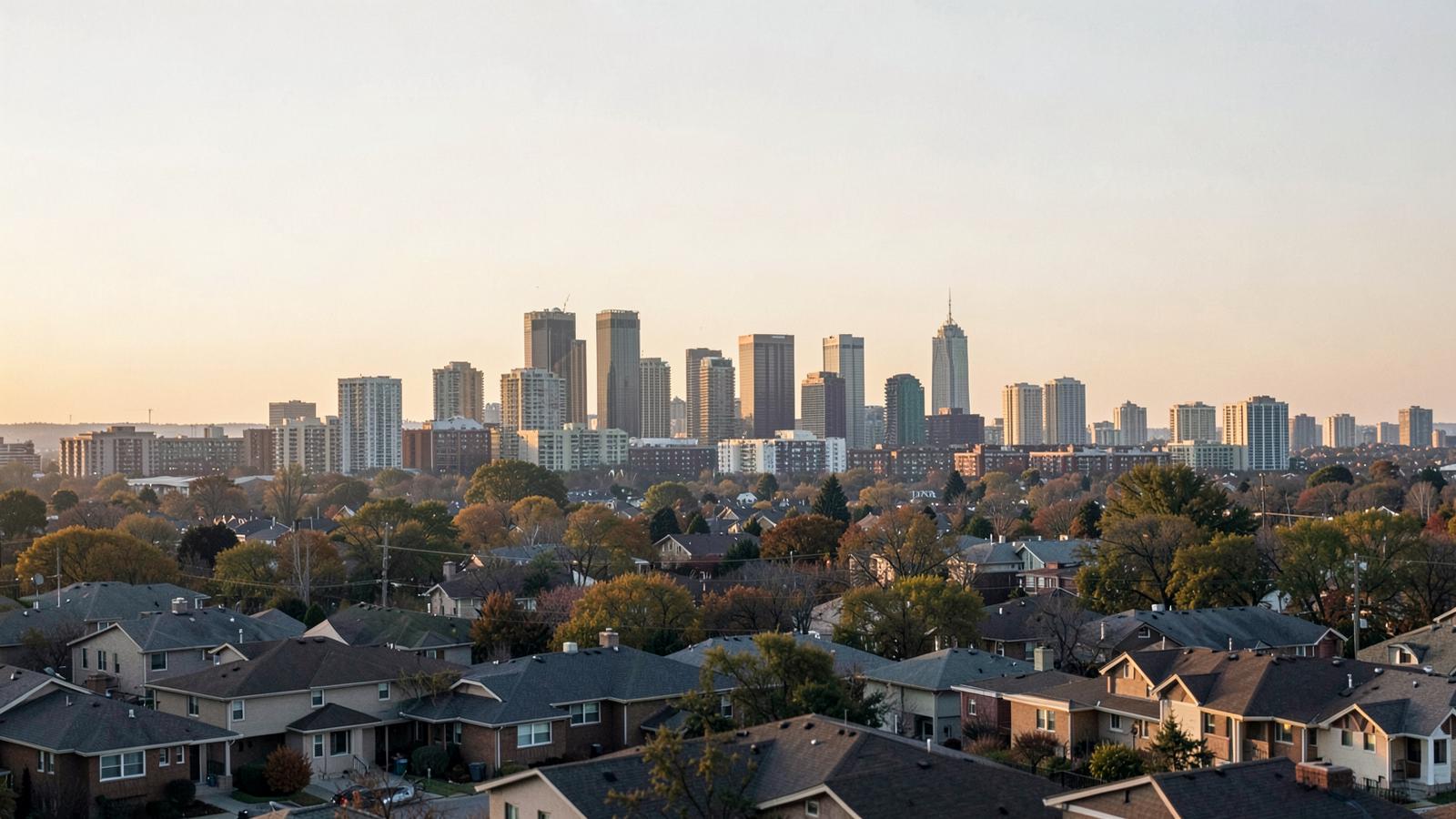
The GTA is no longer one market.
It is a two-speed market. In some neighbourhoods, well-positioned homes are attracting serious buyers within days. In others, properties are sitting for two months or more.
That divergence matters.
It matters if you are buying your first home. It matters if you are deploying capital into an investment. And it matters if you are trying to understand whether a property is genuinely overpriced: or simply located in a slower-moving pocket.
The market is not one number.
It is neighbourhood by neighbourhood. Property by property. Price point by price point.
The July numbers tell a divided story
The broader July 2026 GTA picture from the Toronto Regional Real Estate Board's Market Watch report looked relatively restrained:
- The average selling price was $1,003,956, down 4.5% year over year.
- Sales were down only 0.9% from July 2025.
- New listings declined 17.8% year over year.
- Active listings were also lower than a year ago.
That combination is important.
Prices are softer. Buyers are still cautious. But sellers are not flooding the market with new supply. The result is a GTA market moving toward balance, with conditions varying sharply depending on where: and what: you are looking at.
This is why the average price can fall while certain homes still sell quickly.
It is also why a property can sit for 60 or 70 days even while another home nearby receives multiple offers.
Broad market statistics provide context. They do not provide a decision.
The fastest-selling GTA neighbourhoods in July
Wahi's July 2026 neighbourhood analysis looked at communities with at least five transactions and compared average days on market.
The fastest-selling neighbourhood was Alderwood in Etobicoke, where homes sold in an average of just 10 days.
The rest of the fastest-moving group included:
| Neighbourhood | Area | Avg. days on market |
|---|---|---|
| Alderwood | Etobicoke | 10 |
| Palmer | Burlington | 15 |
| Uptown Ajax | Ajax | 16 |
| Dovercourt Park | Old Toronto | 16 |
| Humber Bay | Etobicoke | 17 |
| Timberlea | Milton | 17 |
| Bullock | Markham | 17 |
| Ashburn | Whitby | 17 |
| Victoria Park Village | North York | 17 |
| Seaton Village | Old Toronto | 17 |
You will notice something immediately.
These are not all the same kind of neighbourhood.
Alderwood offers established residential streets and a strong concentration of single-family homes. Palmer in Burlington appeals to buyers seeking a settled, family-oriented environment. Uptown Ajax combines suburban housing with access to shopping and transportation. Humber Bay offers a broader mix, including condominiums, low-rise buildings, and freehold homes.
The common thread is not a single architectural style.
It is alignment.
When the location, property type, condition, and asking price line up with what buyers currently want, the market can move quickly.
The slowest-selling GTA neighbourhoods
Now compare that with the other end of the range.
In Chaplin Estates, homes spent an average of 77 days on the market in July.
That is more than seven times the average in Alderwood.
| Neighbourhood | Area | Avg. days on market |
|---|---|---|
| Chaplin Estates | Old Toronto | 77 |
| Tansley Woods | Burlington | 71 |
| Bronte Lakeshore | Oakville | 65 |
| Burlington Waterfront | Burlington | 64 |
| Queen Street Corridor | Brampton | 62 |
Again, the data does not mean these neighbourhoods are undesirable.
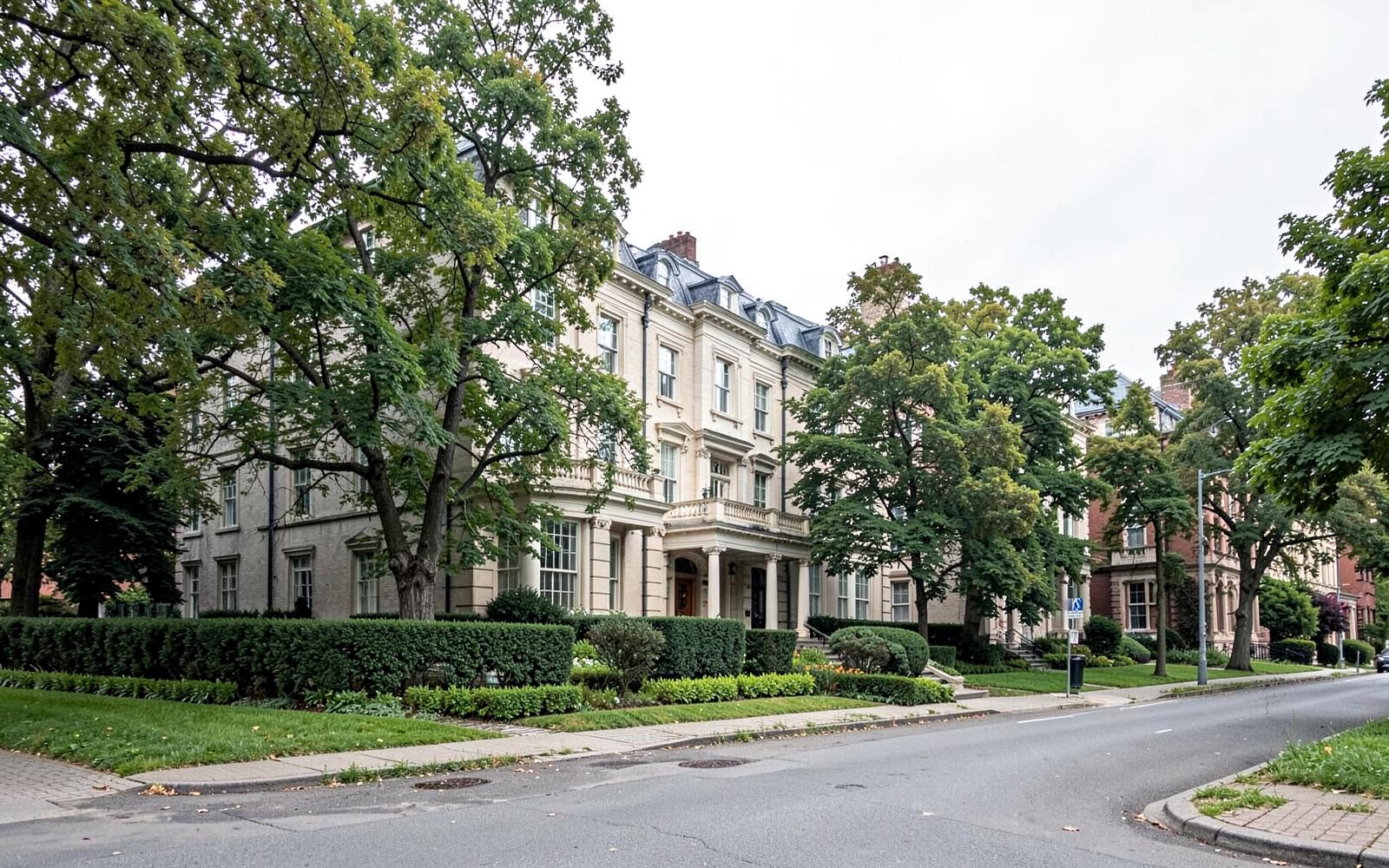
Chaplin Estates has large homes, quiet streets, and proximity to midtown amenities. Bronte Lakeshore and Burlington Waterfront offer lake access and established community infrastructure. Queen Street Corridor provides convenience, retail, and transportation access.
These are not “bad” markets.
They are simply slower markets under current conditions.
That distinction is crucial.
A slower sales pace may reflect higher price points, a more selective buyer pool, a larger or more specialized property type, elevated expectations from sellers, or a mismatch between asking price and recent comparable sales.
Why “days on market” needs interpretation
Here is the myth I want you to question:
“If homes are selling in 10 days, the neighbourhood is hot. If homes are sitting for 70 days, the neighbourhood is weak.”
That is too simplistic.
Days on market is an outcome. It does not explain the cause.
A neighbourhood with a 17-day average may include renovated homes priced accurately and unrenovated homes that would have taken much longer. A neighbourhood with a 65-day average may include one exceptional property that sells quickly and several overpriced homes that distort the overall pace.
Property mix matters.
A detached home and a condominium do not attract the same buyer. A turnkey property and a renovation project do not face the same decision cycle. A $700,000 purchase and a $2 million purchase do not have the same financing, approval, or negotiation dynamics.
Even within one street, two houses can have completely different market responses.
So before you conclude that a property is moving quickly: or sitting too long: ask better questions:
- How many comparable homes actually sold?
- Were those homes similar in size, condition, and price?
- How many listings were withdrawn or relisted?
- What percentage of the asking price did sellers ultimately receive?
- Were there price reductions?
- Is the property competing with a large amount of similar inventory?
- Is the current asking price supported by recent evidence?
This is where buyers and investors need context, not more noise.
What this means if you are buying
If you are capital-ready, the current GTA market may offer more room to think than the headlines suggest.
But more time does not mean you should become passive.
In a fast-moving pocket such as Alderwood, Palmer, or Dovercourt Park, you may need to be prepared to act when the right property appears. That does not mean abandoning due diligence. It means completing your financing work, defining your non-negotiables, and understanding fair value before you are standing in the middle of a negotiation.
In a slower pocket such as Chaplin Estates, Tansley Woods, or the Burlington Waterfront, you may have more opportunity to negotiate.
But do not mistake time on market for automatic leverage.
A seller may be patient. A property may be rare. The home may be correctly priced despite spending several weeks on the market. Your offer still needs to make sense.
The strongest strategy is not to move fastest. It is to know when speed is justified.

What this means for investors
Serious investors should be even more careful with broad GTA averages.
An average price decline of 4.5% does not tell you whether the asset you are considering has improved in value, lost value, or simply belongs to a segment with different demand.
You need to understand:
- The local renter and buyer pool.
- The supply of competing properties.
- The realistic resale audience.
- Property taxes, maintenance, and financing costs.
- Whether the neighbourhood's demand is durable or temporary.
- How long you may need to hold the asset if the exit takes longer than expected.
A property that sells quickly is not automatically a good investment.
A property that sits for 70 days is not automatically a bargain.
The investment case has to survive beyond the listing timeline.
The better approach is deliberate:
- Define the property and outcome you actually want.
- Compare the right neighbourhoods and property types.
- Study recent sales, not just asking prices.
- Establish your walk-away number before emotions enter the discussion.
- Move decisively when the evidence supports the decision.
That is how you slow down to speed up.
The right question is not “What is the market doing?”
The better question is:
“What is this specific property, in this specific GTA neighbourhood, likely to require from me?”
You may need patience.
You may need speed.
You may need a stronger negotiation position, a more realistic price expectation, or the discipline to walk away.
Those answers will not come from one GTA-wide average.
They come from reading the local evidence clearly.
I provide strategic guidance for buyers and serious investors who want to navigate uncertain markets without being pushed into rushed decisions. That may include evaluating an on-market opportunity, identifying a more suitable neighbourhood, or considering selective private and off-market options available to vetted, capital-ready clients.
I do not use mass emails or public pressure tactics.
Talk it through
If you want a calm, practical second look at your GTA buying or investment position, call Rachel through the contact details on the website.
The next step is simply a conversation about your timing, your criteria, and what the evidence is actually saying.
Read more market insights here →Nadia Musharbash
Broker, CENTURY 21 Millennium Inc.